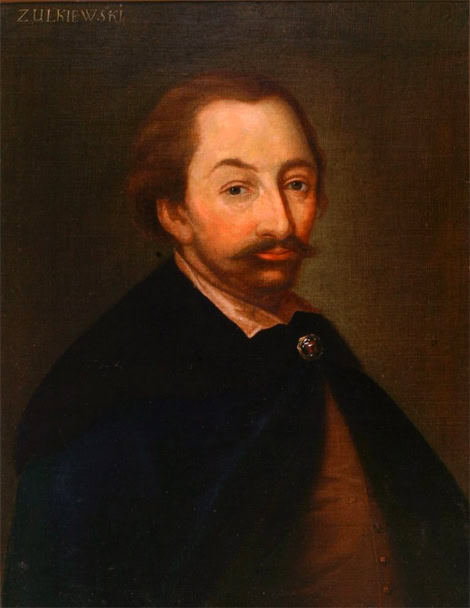
Stanisław Żółkiewski / historia.org.pl
How did the Poles conquer Moscow? 415 years since the memorable campaign
On 29 September 1610, a Polish-Lithuanian army led by Hetman Stanisław Żółkiewski entered Moscow. By 9 October, the Polish-Lithuanian garrison had occupied the Kremlin. But how did this happen, and why was Russia not ultimately conquered?
The year 1610 marks an important point in the history of Eastern Europe. During the war between the Polish–Lithuanian Commonwealth and Moscow (1609–1618), two significant events occurred: the Battle of Klushino on 4 July and the subsequent entry of Polish–Lithuanian troops into Moscow. Two years later, on 7 November 1612, the Kremlin garrison was forced to surrender to the Russians. Ultimately, the war ended in victory for the Polish-Lithuanian Commonwealth. The Truce of Dyvilin resulted in the Commonwealth achieving its largest territorial extent in history, covering approximately 1 million square kilometres. However, Moscow was not conquered as a state, and it grew to become the largest empire in this part of Europe in the following century, partitioning the Polish-Lithuanian Commonwealth. The question of whether Moscow could have been permanently subjugated by the Polish-Lithuanian state before falling victim to it still resonates today.
The origins of the war, which broke out in 1609, can be traced back several years. In 1603, a man appeared in the Polish–Lithuanian Commonwealth claiming to be Dmitry, the son of Tsar Ivan the Terrible, who was believed to be dead. Known as the impostor, he claimed that he had a right to the Moscow throne and that the current tsar, Boris Godunov, was a usurper who had previously attempted to assassinate him to seize power. Dmitry found supporters in the Polish-Lithuanian Commonwealth. Although neither King Sigismund III nor the Sejm officially supported him, Dmitry began to gather forces around him with the tacit consent of the monarch and the support of some of the borderland magnates to help him regain the throne. Some of the Polish-Lithuanian elite, mainly those close to the king, believed that they could use this situation to place a loyal ally on the Moscow throne. This would ensure peace in the east and give them freedom of action in the Baltic region, where they were competing with the Swedes. The most daring even made plans for a union with Moscow.
In 1604, Dmitry set off for Moscow with the backing of some magnate families’ private armies, but not the entire Polish–Lithuanian Commonwealth. The Russians welcomed him and voluntarily surrendered the tsarist crown in 1605, but a conspiracy quickly formed among the boyars against Dmitry. This resulted in the impostor losing his life and Vasily Shuisky taking power in Moscow in 1606. As early as 1607, another impostor claiming to be Dmitry rose up against Shuisky’s rule, gaining support in direct proportion to the chaos in the Muscovite state. However, the Polish-Lithuanian Commonwealth still did not intervene as it was dealing with its own civil war in the form of the Zebrzydowski rebellion (1606–1607). Only the private armies of magnates were present, having set out for Moscow with Dmitry I.
Tsar Vasily Shuisky sought an agreement with Sigismund III, asking him to force the magnates to withdraw their support for Dmitry II. When Sigismund III refused, Shuisky formed an alliance with Sweden in 1609. This alliance was directed against the Polish–Lithuanian Commonwealth and undermined its interests in the east and on the Baltic Sea. War became inevitable.
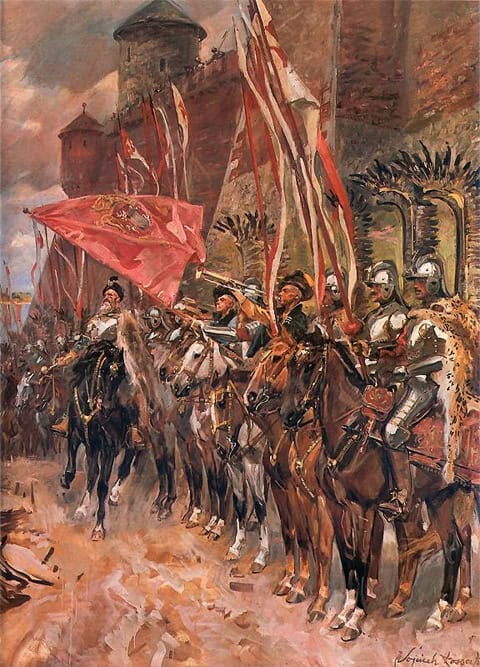
Hetman Żółkiewski with the hussars (painting by Wojciech Kossak) /https://historia.org.pl/
In September 1609, Sigismund III crossed the border into the Moscow state. He could count on only 11,000 soldiers, as the treasury did not have enough money for more due to the nobility’s reluctance to wage war and pay higher taxes for this purpose. However, the king had one of the best commanders of the time, Hetman Stanisław Żółkiewski, at his side. En route to Moscow, the formidable Smolensk fortress had to be overcome. The Polish-Lithuanian forces were unable to capture it quickly, so they began a siege that lasted until mid-1611. While the main forces were engaged at Smolensk, Hetman Żółkiewski led small units of 2,700–3,600 soldiers to victory over the combined Moscow–Swedish forces of 22,000–25,000 men at Klushino. He then entered Moscow and occupied the Kremlin with his garrison in autumn 1610. The Russians opened the gates themselves and did not take the city by force. The boyar elite concluded an agreement with the hetman whereby the son of King Sigismund III, Władysław, would become the new tsar. However, this agreement was never implemented.
In 1611, a rebellion broke out in response to the presence of Poles in the Kremlin. The recent civil war in Moscow quickly turned into a defensive war against the 'Lachom’, fuelled further by the Orthodox Church’s fear of growing Catholic influence in the country. For the Polish-Lithuanian Commonwealth to be able to intervene effectively, the Sejm would have to agree to a costly campaign, and the nobility would have to be willing and determined to take control of Moscow. However, neither of these conditions was met. There was strong opposition to the policies of Sigismund III within the country, with the king being accused of absolutist tendencies. Most of the nobility did not want to bear the costs of the 'Moscow affair’, believing that the king was deliberately pushing the Commonwealth into war with Moscow to gain an ally in the east in his fight for the Swedish throne, thus pursuing his own ambitions rather than those of his subjects. While the elites of the Commonwealth hoped to regain lands taken from Lithuania by Moscow in previous wars, they did not consider subjugating their eastern neighbour.
In 1612, the Polish-Lithuanian garrison of the Kremlin was forced to surrender after failing to receive adequate support in time. Mikhail Romanov then replaced Władysław Vasa as tsar. This marked the beginning of the Romanov dynasty’s reign, which would last until the October Revolution in 1917.
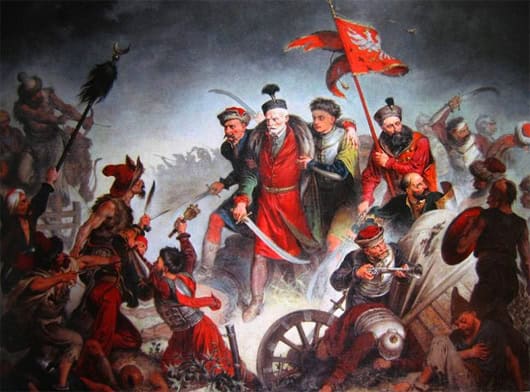
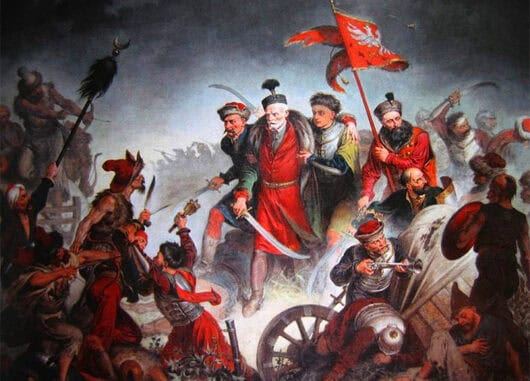
The death of Hetman Stanisław Żółkiewski at Cecora (painting by Walery Eljasz Radzikowski) / historia.org.pl

A historian specializing in the history of political thought and the history of ideas. Editor of the Warsaw editorial office of the monthly magazine and portal 'Wszystko co Najważniejsze’.
Source: DlaPolonii.pl