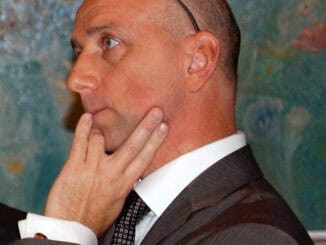
Michał Kłosowski: The challenge and privilege of nurturing Polish identity.
In a world of globalization and migration, the pressing question is: how to nurture Polish identity among children growing up outside the country? The first of September is a good day to start this discussion.
In Poland, the first of September marks not only the anniversary of the tragic events of 1939, but also the symbolic start of the school year in the country and at many Polish educational institutions abroad. Every year, it reminds us of the importance of education and upbringing, particularly concerning identity. In today’s globalised and mobile world, the challenge is clear: how can we pass on Polish identity to the next generation?
Young Polonia – a new, self-assured generation
In the shadow of great emigration stories, a generation of young Poles is growing up today: children and young people who not only know Polish, but live it too. This is a significant accomplishment for Polish schools abroad, their teachers, and all those who have dedicated themselves to educating the younger generations. These young people are now closer to Anglo-Saxon culture on TikTok than to the traditional Polish identity of their parents or grandparents. They are a cosmopolitan generation with strong roots, thanks to education. Children born in London, Paris, or Rome no longer view Polishness as an obligation, but as an attribute and a value that is part of their story and identity.
Many of them are not only passive recipients of Polish culture, but also its creative ambassadors. They are young people who bridge the gap between languages, cultures, and values, with one foot on the Vistula and the other on the Tiber, the Seine, or the Thames. As researchers of migrant identity emphasise, this is a hybrid identity, but not a blurred one. It is conscious, strong, and open to dialogue.
Nurturing Polish identity: language, culture, values
What do Polish children abroad need to keep their Polish identity alive? Three pillars: language, culture, and values.
Today, the main challenge of raising children to be Polish is language-related. As John Paul II said, language is the foundation; it is the 'language of the heart’ that connects generations and fosters a connection to the homeland. Learning Polish at home, in Polish Saturday schools, and through books, fairy tales, songs, and conversations is key to preserving identity. Without language, Polishness can easily become just a memory, a faded trace of the past. This is why parents and family in general play such an important role in helping to maintain and cultivate this most basic bond with Poland: the linguistic bond. As Wittgenstein observed, language shapes how we perceive reality — it enables us to 'think in Polish’.
The second pillar is culture. But this is understood not only as festive traditions, but also as contact with contemporary Poland: its music, film, sport, literature, as well as scientific achievements and successes in the field of artificial intelligence. In a world that is moving so fast and where, because of social media, the younger generation is taught instant gratification, highlighting and celebrating Poland’s achievements is essential. This shows that Poland is not just a museum of memories, but a dynamic, modern, and open country, where it is worth finding inspiration and perhaps even returning to.
The third dimension, however, is values and history, which should be passed on without distortions or myths, but with pride and responsibility. It is not only about telling the story of ‘how it was’, but also about reflecting on ‘what it means today’ and what significance our history and heritage have for contemporary life, for the choices we make and for the future we are creating together. History is what builds pride and confidence – the pillars of success in the modern world.
Taking all this into account, parents, Polish community organizations, and schools are now faced with the task of making Polish identity a choice, not a burden. So that it is not associated with coercion, but with something attractive and inspiring, in which one can find meaning and community.
Ambassadors of everyday life
Therefore, there can be no nurturing of Polish identity in any sense without family and loved ones. School begins at home. And it must be said that Polish parents abroad are doing a great job in this regard. Ambassadors of Polishness are not only influencers and celebrities, but first and foremost parents who speak Polish at home, teachers in Polish schools abroad, cultural animators, clergy organising Polish Masses, and young people who showcase Polish traditions and modernity on social media.
An example? A programmer in Dublin who teaches children their native language on weekends. A medical student in Rome who records a podcast about Polish literature. A teenager in Berlin who creates memes about Polish history for his friends. Each of them builds bridges between Poland and the world and tells the world about Poland.
Polishness – a choice, not an obligation
On the day when the first bell rings in Polish schools, it is worth remembering once again that the school of the Polish identity begins at home. It is in the family that a child first hears Polish words, tastes borscht or pierogi, watches cartoons in their native language, or reads books about Polish battles, discoveries, or aspirations of a particular era. But then the role is taken over by Polish community schools, scouting, parish communities, and modern tools such as apps, games, and online films. Quite a few of these can be found on the websites of various Polish institutions, such as the education department of the Institute of National Remembrance.
After all, it is not just about the child having a ‘second school’ as a burden, but about Polishness being a natural part of life. Language is an investment that provides double cultural and professional capital, and an additional advantage in the form of bilingualism, which opens doors to a dynamically developing market.
The most important thing in educating children about being Polish, however, is that it should be a gift, not a compulsion. The young generation of the Polish diaspora shows that it is possible to be proud of being Polish without complexes and without closing oneself off from the world, in fact, forging this pride in being Polish, which they exude today themselves. They show that Poland – modern, proud, open, ambitious – can be an inspiration and a topic of discussion on a global scale. Because our history is proof that it is possible. The first of September is a good day to start this conversation.
Michał Kłosowski
SOURCE: DlaPolonii.pl