

Nearly one-third of social media research has undisclosed ties to industry, preprint claims
Industry-linked studies were also more likely to focus on particular topics, suggesting these ties may be skewing the field
Researchers studying the impact of social media on society—everything from effects on teenagers’ mental health to the spread of misinformation—often work with the companies that run these platforms. But these ties evidently run much deeper than the scientific record acknowledges.
A new preprint reports that in nearly one-third of studies on social media appearing in major interdisciplinary journals, the authors have ties to industry that should be disclosed but aren’t. Some received funding from a social media company, others previously co-authored work with industry employees. These ties may be skewing the research, the authors say. The industry-linked studies appear more likely to focus on topics such as why individuals share misinformation than on the role of the platforms and their algorithms.
The finding of widespread undisclosed ties is “really shocking and completely unacceptable,” says Sander van der Linden, a psychologist at the University of Cambridge who was not involved in the work, though he adds: “I suspect it’s not always nefarious.” Norms on conflicts of interest (COI) are less established in social science than other areas such as medicine, he notes. “Maybe scientists who work on social media research need better education about the importance of transparency and COI.” With big tech companies funding a lot of research on social media, the potential for conflicts of interest is huge, says Naomi Oreskes, a historian of science at Harvard University. “This paper is important because it may help to trigger a larger conversation about the issue.”
To gauge how many papers might have undeclared ties with industry, Joe Bak-Coleman, a social scientist at the University of Washington, and colleagues scoured Science, Nature, and the Proceedings of the National Academy of Sciences—as well as their offshoot journals such as Science Advances and Nature Communications—for research on social media published after 2010. They identified 295 articles, which had collectively been cited 50,000 times and mentioned in more than 15,000 news stories. In 20% of these articles, the authors declared some link to industry somewhere in the paper, such as receiving funding or having worked with a company recently.
The team then looked through information from OpenAlex—an open-access catalog of scientific papers—and industry announcements to check for ties between authors and social media companies during the period when the journals required disclosure. They found about half of all papers had some such tie, suggesting that authors in 30% of all studies were not declaring potential conflicts of interest.
For the subset of papers that revealed the identity of the editors and peer reviewers, the authors also examined whether they too had any conflicts of interest. Adding those who did to the analysis pushed up the proportion of papers that had some industry tie to 66%. Extrapolating to cases where the reviewers were anonymous, the researchers estimated that only one in five papers were likely to have remained fully independent of industry throughout the publication process.
The authors say they wanted to highlight systemic issues, so won’t point fingers at any particular researchers. “In any individual case, you can be like, ‘here’s why I didn’t disclose’ and it’s probably not going to sound all that unreasonable,” says co-author Cailin O’Connor, a philosopher of science at the University of California, Irvine. “But when you take it all together, something unreasonable is happening.”
Bak-Coleman says the journals should audit all the social media research they have published and in cases where undisclosed conflicts did breach a journal’s criteria, they should correct the scientific record. “It creates transparency for the existing literature, but it also reminds authors of their obligations and responsibilities and consequences for failing to disclose.” Van der Linden and others point out, however, that the preprint’s authors use very stringent criteria for deciding what constitutes a tie with industry. Simply co-authoring a paper with employees at Meta in recent years counts as a potential conflict, for instance. (A spokesperson for Science says that the journal would not require researchers to disclose such collaborations in a new paper.)
The researchers were also curious whether papers tied to social media companies were more likely to focus on certain topics. The food and tobacco industries have long been accused of funding research that draws attention away from possible harms of their products. For instance, Coca-Cola has poured money into research on exercise and obesity for years, O’Connor says. “It’s real research, and it’s often found things that are important or interesting,” she says, but it takes the spotlight off their products.
Similarly, the team found that research on how people share misinformation was more common among industry-linked work, whereas research into the dynamics of the platforms—for instance how algorithms impact polarization—was rare. “While we cannot definitively show that industry funding in this area is redirecting attention from products to consumers, our results are consistent with this possibility,” the authors write.
Van der Linden says that possibility doesn’t worry him, because one line of research doesn’t preclude other studies. “I think it’s a false dilemma,” he says. The bigger problem is that social media companies control the data, meaning certain types of experiments, such as directly manipulating the feed in the Instagram app, can only be done working with them, he says.
For some researchers, those collaborations remain important and worthwhile. “There are purists who think all academic research on social media should be completely separate from industry, but these relationships can be useful for creating knowledge,” says Shelby Grossman, a political scientist at Arizona State University. But academics need to do better disclosing those ties, she says.
That is particularly important as funding cuts in the United States are leading to calls for universities to work more with the private sector, Oreskes says. “Private sector partnership can work in the right circumstances, and with the right guardrails, but right now we have few, and mostly very weak guardrails.”
About the author
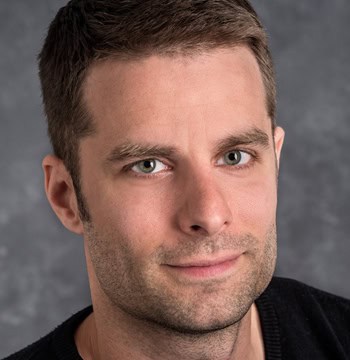
Kai Kupferschmidt is a contributing correspondent for Science magazine based in Berlin, Germany. He has long covered infectious diseases and global health, but he also writes about research into psychedelics and the science of misinformation. His writing has appeared in many German outlets, and he has won several awards, including the Journalism Award of the German Aids Foundation and an NASW Science in Society Journalism Award. He is co-creator and co-host of the podcast “Pandemia.” Kai has a degree in molecular biomedicine and has written a book on the science surrounding the color blue: Blue. In Search of Nature’s Rarest Color. He is on Bluesky at @kakape.bsky.social.
SOURCE: https://www.science.org/


